EKATO

EKATO

Hydrogenation

Highly Efficient Mass Transfer and Heat Exchange
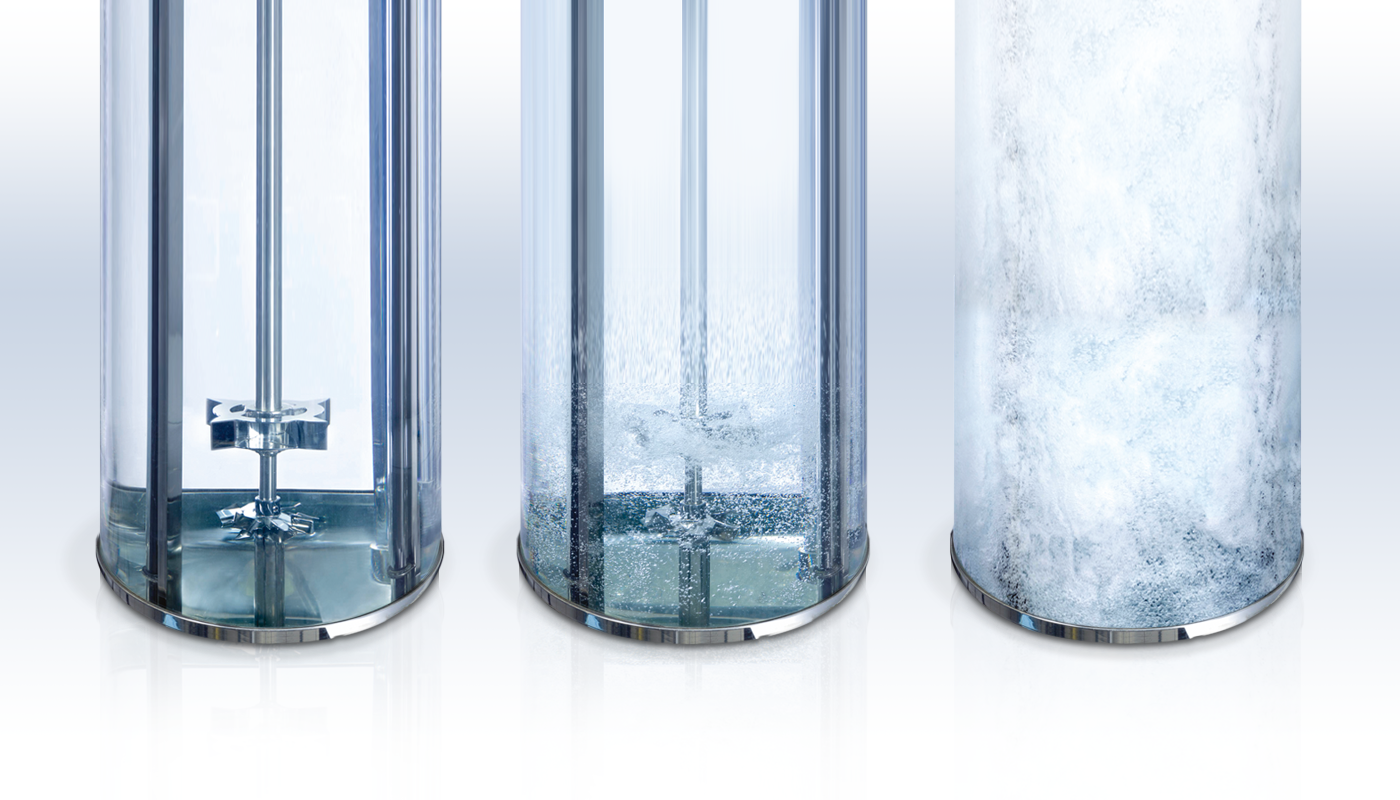
The process of hydrogenation is a chemical reaction type with gaseous hydrogens as a reaction partner. Hydrogenations are generally carried out as heterogeneously catalyzed processes. The hydrogen is dispersed into fine bubbles in order to be dissolved in a liquid.
Contact us

The agitation system primarily has the following tasks

  • Intensification of the mass transfer of hydrogen from the gas to the liquid phase
  • Removal of the heat of reaction by flowing against the heat exchanger in the reactor
  • Suspending the catalyst
  • Homogenizing the reactor contents
  • Avoidance of concentration and temperature differences
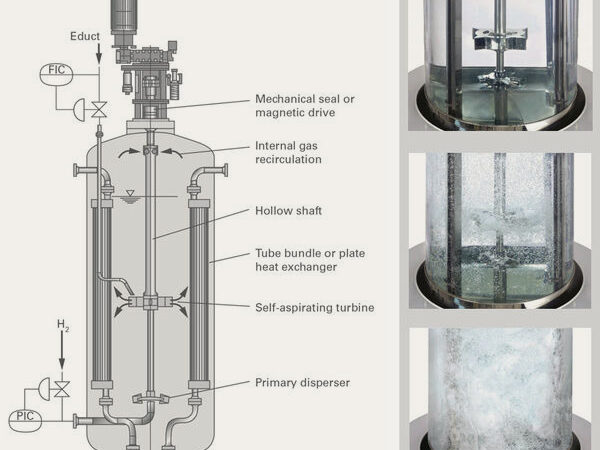
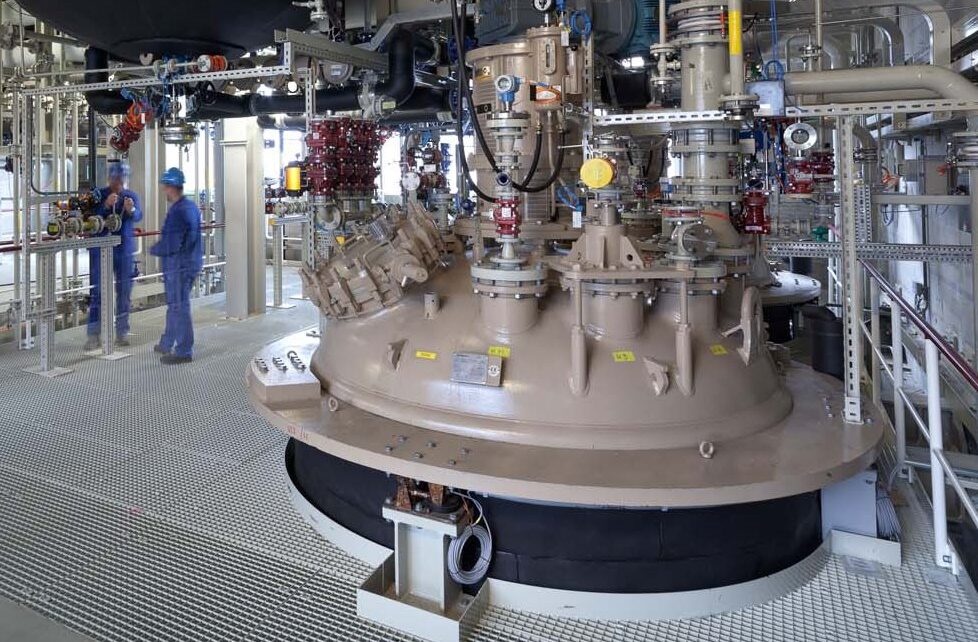
Since almost all hydrogenation reactions take place under conditions with limited mass transfer, the EKATO hydrogenation reactor, equipped with the unique EKATO combined gassing and a powerful cooling system, allow increased mass transfer and thus higher space-time yields with mostly improved product quality.

EKATO has been active in the field of hydrogenation for over 90 years. With more than 500 active references, we offer an extensive product and service portfolio for everything to do with hydrogenation – from tests in the EKATO R&D center, the resulting scale-up, to plant components and turnkey hydrogenation plants.

Hydrogenation Plants for Specialty Chemicals

A manufacturer of specialty chemicals for the paint industry was able to determine through tests in the hydrogenation pilot plant at EKATO in Schopfheim, Germany, that it is possible to reduce the catalyst loading from 2.5% to 1.0% and the reaction time from four to two hours if the dispersion of the hydrogen and the cooling capacity of the reactor are improved. 

The subsequent conversion of the existing hydrogenation reactor was planned and executed by EKATO in terms of process engineering and mechanics. Core elements of the rebuild were a conversion of the reactor with 2 m3 useful volume to the unique EKATO combi gassing, as well as an optimization of the existing cooling system. With 1200 starts per year, 3,600 kg of a Pd/C catalyst could be saved annually, resulting in savings in the amount of approx. 400,000.00 Euro per year.

Successful optimization of a hydrogenation reactor together with EKATO

  • Annual saving of 3,600 kg Pd/C catalyst
  • Savings of approx. 400,000€ per year

Production of Active Pharmaceutical Ingredients (API)

Hydrogenation is a frequently occurring synthesis step in the production of active pharmaceutical ingredients. Success factors in this industry are the rapid market introduction of new substances, maximum efficiency, and the greatest possible flexibility in production.

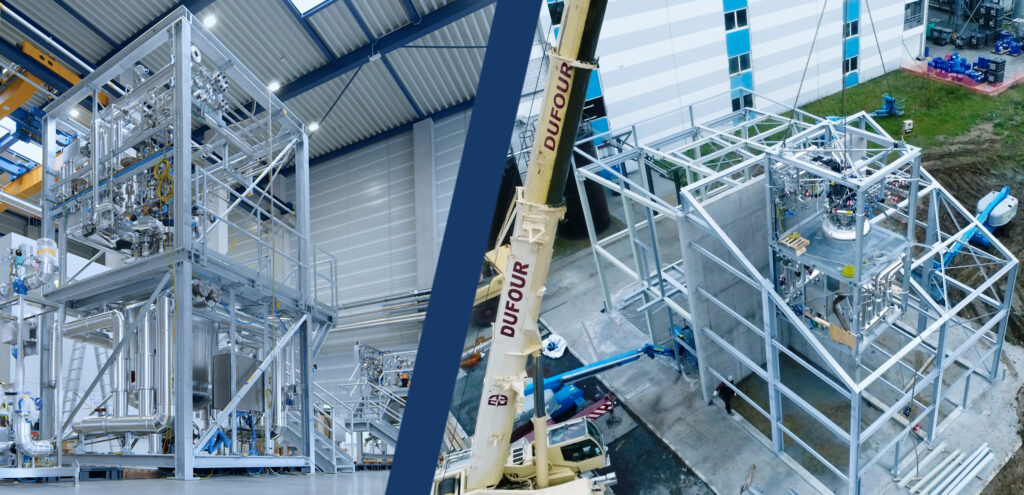
Together with EKATO, a European active ingredient manufacturer was able to realize its investment in a new hydrogenation plant with a project duration of less than 12 months from concept to commissioning and thus gained the decisive market advantage: the fastest possible production start-up (“time-to-market”).

The plant was completely designed, manufactured and tested by EKATO and comprises four functional plant modules (skids), which were installed on site in a building designed by EKATO.

EKATO combines the planning, manufacture and assembly of plant modules under one roof through modular plant concepts, thus making optimum use of its skills and resources as a supplier of turnkey plants.

"The pre-qualified modules of our new hydrogenation unit were installed on the day of arrival and we started the production in the same month"

Hydrogenation Plants for Sugar Alcohol

Sorbitol is a sugar alcohol obtained by hydrogenation of glucose. Sugar alcohols are used as sugar substitutes in the food industry and are also important raw materials for numerous other applications and markets. In order to ensure the best product quality with increasing demands on economic efficiency, EKATO has carried out extensive development studies to analyze and optimize the hydrogenation of sugars to sugar alcohols such as sorbitol, xylitol and mannitol. The aim of these development studies was to increase the space-time yield, minimize the content of residual reducing sugars, suppress the formation of gluconic acid, and improve the catalyst lifetime.

Based on these extensive investigations, a new, optimized standard series of hydrogenation reactors was developed for the production of sugar alcohols with filling volumes of up to 88 m3 . In addition to process engineering optimization, the new reactor series was investigated by means of FEM in order to exclude the possibility of failure of reactor internals under cyclic loads.

Most competitive hydrogenation technology for polyol derivates:

  • High performance reactor technology
  • Robust and reliable equipment
  • Low capital expenses
  • Low operating expenses

You are currently viewing a placeholder content from YouTube. To access the actual content, click the button below. Please note that doing so will share data with third-party providers.

More Information
Modal Analysis of Coils The effect of excitation frequencies can be simulated by FEA. The results help to prevent fatigue failure by optimized design.

Process Solution Contact Form

EKATO Rühr- und Mischtechnik GmbH (EKATO RMT)

Focus: High-performance agitators, reactor agitators, process plants, mechanical seals
Typical Applications:

  • Chemical industry (specialty, polymer, bulk chemicals)
  • Pharmaceutical industry
  • Hydrometallurgy
  • Flue gas desulfurization
  • Biotechnology
  • Paints and coatings

Products & Services:

  • Customized agitators and impellers
  • Reactor agitators (e.g., coaxial, magnetic agitators)
  • Mechanical seals and seal supply systems
  • Process and pilot plants
  • CFD/FEA simulations, scale-up, engineering support
  • Global service network including maintenance, training, spare parts management

EKATO Systems GmbH

Focus: Vacuum processing units for liquids and solids (UNIMIX & SOLIDMIX)
Typical Applications:

  • Cosmetics industry
  • Pharmaceutical industry
  • Food industry
  • Chemical industry

Products & Services:

  • UNIMIX: Vacuum processing mixers for liquid to highly viscous products
  • SOLIDMIX: Solid mixers and dryers for powders and granules
  • Laboratory and pilot-scale systems (3–1000 liters)
  • GMP-compliant turnkey solutions including automation
  • Process consulting, development, scale-up, commissioning, maintenance

EKATO Fluid GmbH

Focus: Standardized, cost-effective industrial agitators
Typical Applications:

  • Chemical industry
  • Paints and coatings
  • Biotechnology
  • Biofuels
  • Pharmaceuticals
  • Cosmetics
  • Water and wastewater
  • Food industry
  • Pulp and paper
  • Fertilizers

Products & Services:

  • Top-entry and side-entry agitators (e.g., EM 2000, ES 2000, MD/SD)
  • Solutions for storage tanks, open and closed vessels
  • Simple mechanical seals
  • Short delivery times, high cost-efficiency
  • On-site commissioning and service

What does “Number of sealing faces” mean?

Single-acting mechanical seals
These seals have one sealing surface and only seal in one direction. They are generally simpler in design and are commonly used in applications where pressure is applied from only one side.

Double-acting mechanical seals
These seals have two sealing surfaces and can seal in both directions. They are ideal for applications where pressure may come from both sides or where a higher sealing performance is required.

Triple-acting mechanical seals
These are less common and used in specialized applications that require a more complex sealing setup. They offer additional sealing surfaces or mechanisms to ensure reliable sealing even in highly demanding environments.