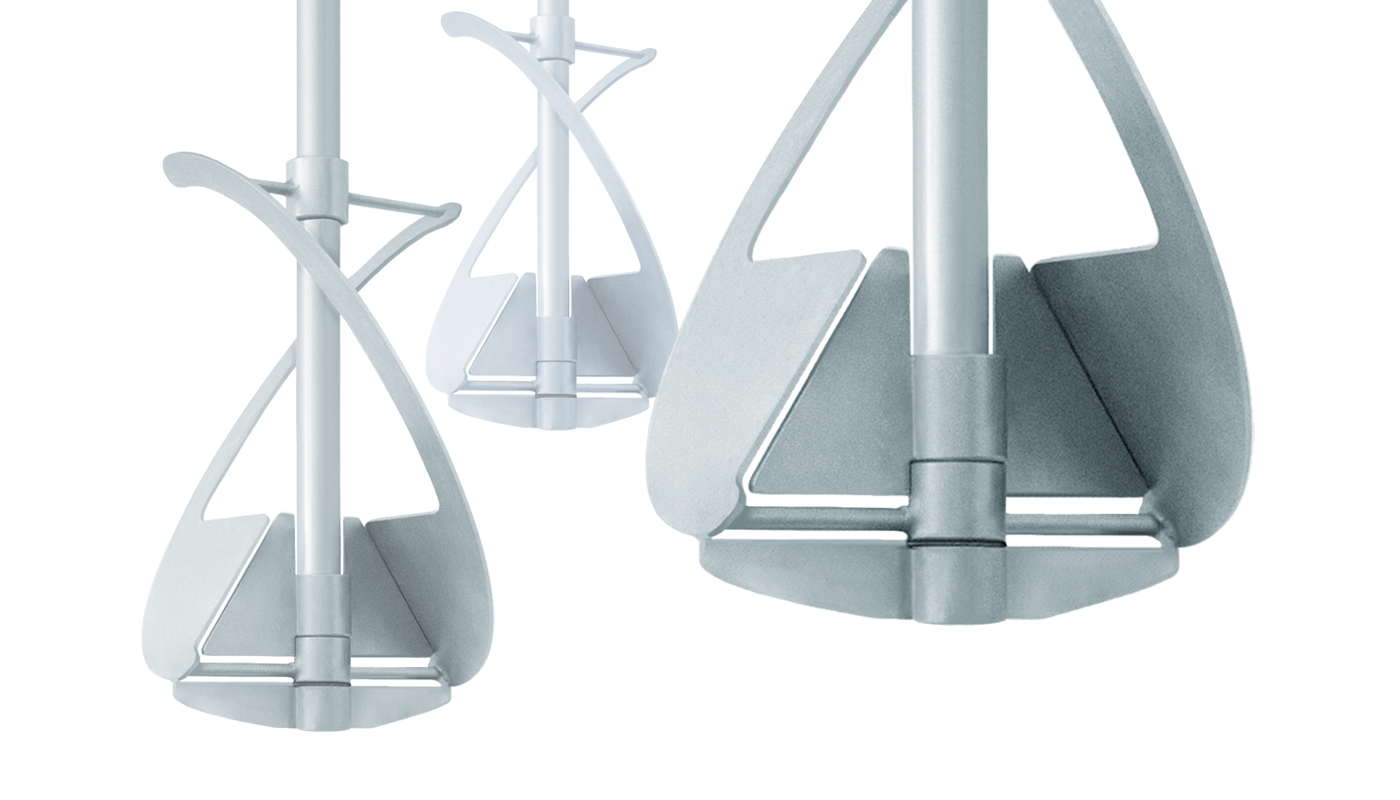
Impeller for Low to Medium Viscous Multi-Phase Reactions
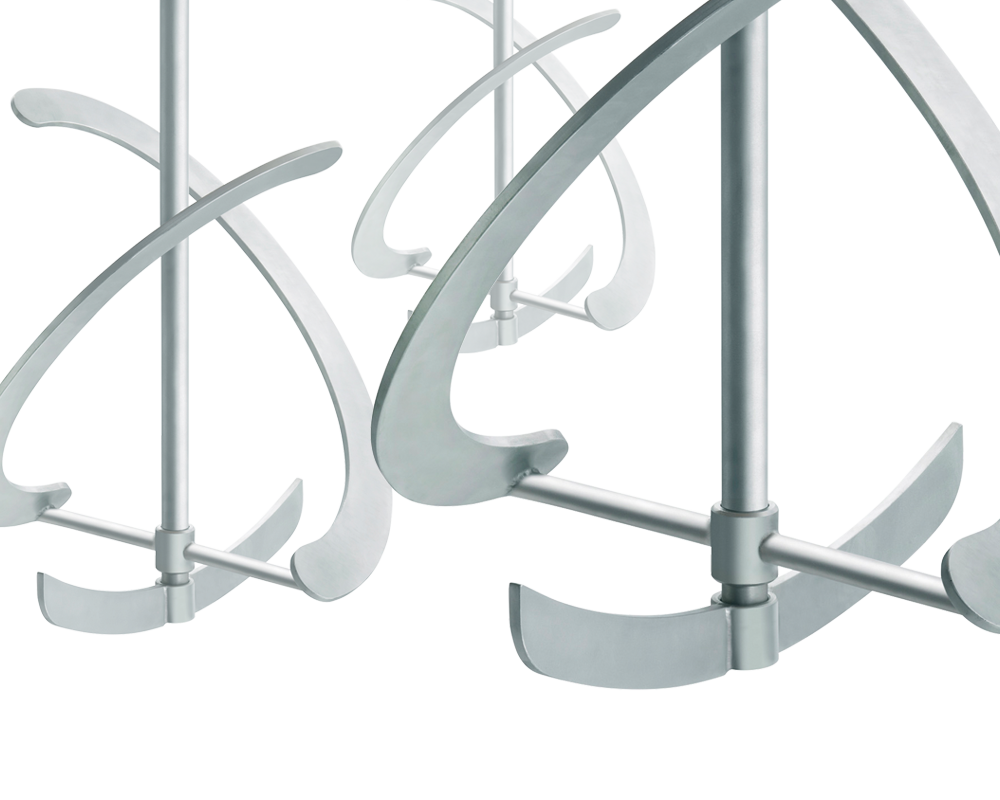
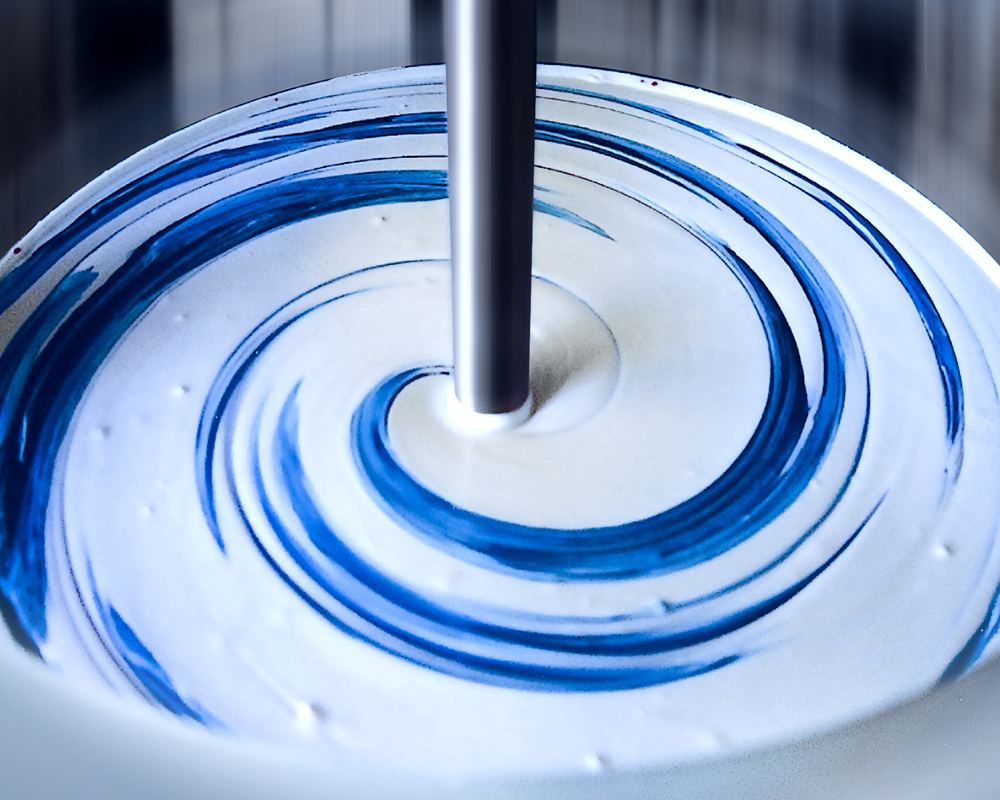
Modular impeller system with an optimized split between axial and radial flow components. Especially in the mid-viscous range, the blend times can be reduced by up to 50%, compared to standard radial working mixing systems as anchor-, blade- or frame-type impellers.
Reactors with enhanced heat transfer requirements at elevated viscosities are often equipped with radially working mixing systems as anchor-, blade- or frame-type impellers.
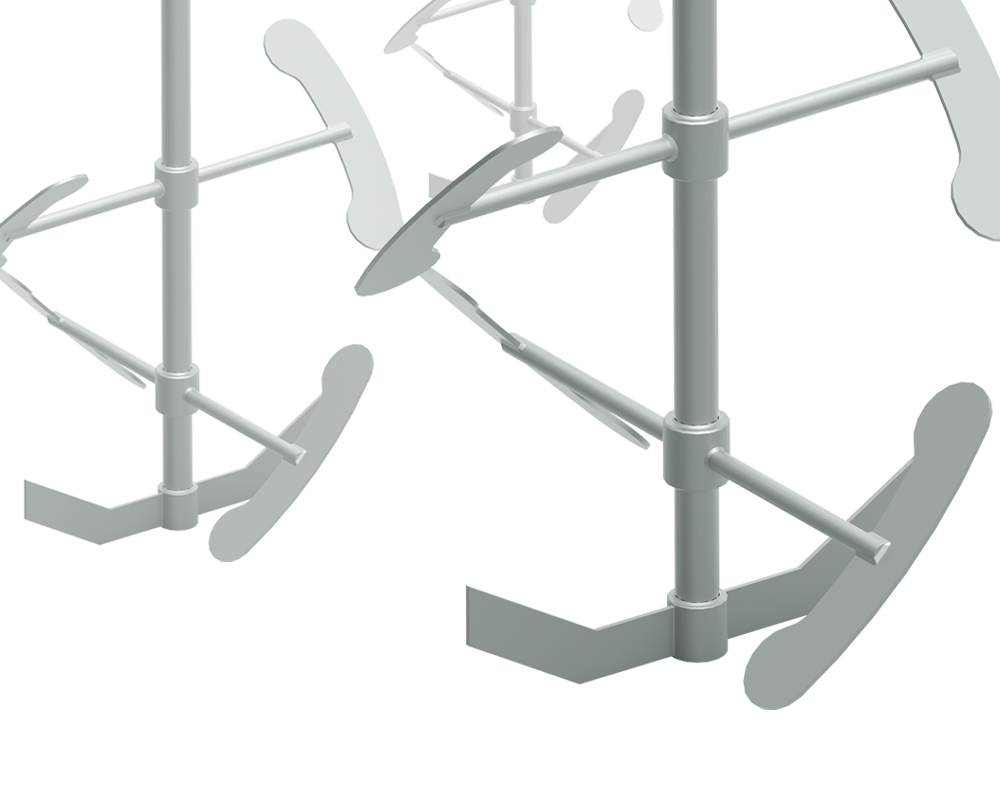
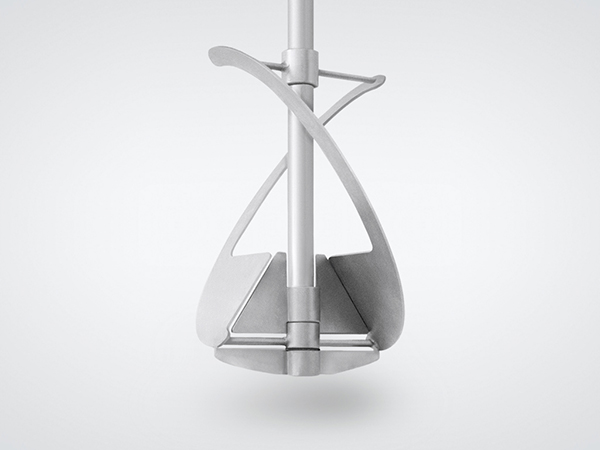
o exceed their performance EKATO has developed the VARIOBLADE, which is a flexible, modular impeller with an optimized split between axial and radial flow components. Compared to standard grid – or blade type impellers, the blend times – especially in the mid-viscous range – can be reduced by up to 50%.
The VARIOBLADE is not a close-wall-clearance system but operates in the center of reactors – typically with coils – where radial flow components are required. The positioning of the three elements – outer blade, inner blade and bottom anchor – can be varied.
Therefore this impeller can handle different mixing task combinations with varying viscosities up to 50,000 cP. As an example the modular inner blade can be adjusted to achieve a high dispersion effect. This is a significant advantage for multi-phase applications such as gas-liquid or liquid-liquid reactions.

EKATO VARIOBLADE
You are currently viewing a placeholder content from YouTube. To access the actual content, click the button below. Please note that doing so will share data with third-party providers.
Precise knowledge or analysis of the required basic mixing tasks are always the first step towards the optimum mixing technology solution. Based on th…
Top-entry and side-entry agitators (e.g., EM 2000, ES 2000, MD/SD)
Solutions for storage tanks, open and closed vessels
Simple mechanical seals
Short delivery times, high cost-efficiency
On-site commissioning and service
What does “Number of sealing faces” mean?
Single-acting mechanical seals These seals have one sealing surface and only seal in one direction. They are generally simpler in design and are commonly used in applications where pressure is applied from only one side.
Double-acting mechanical seals These seals have two sealing surfaces and can seal in both directions. They are ideal for applications where pressure may come from both sides or where a higher sealing performance is required.
Triple-acting mechanical seals These are less common and used in specialized applications that require a more complex sealing setup. They offer additional sealing surfaces or mechanisms to ensure reliable sealing even in highly demanding environments.
You are currently viewing a placeholder content from Google Maps. To access the actual content, click the button below. Please note that doing so will share data with third-party providers.
You are currently viewing a placeholder content from OpenStreetMap. To access the actual content, click the button below. Please note that doing so will share data with third-party providers.
You are currently viewing a placeholder content from Facebook. To access the actual content, click the button below. Please note that doing so will share data with third-party providers.
You are currently viewing a placeholder content from hCaptcha. To access the actual content, click the button below. Please note that doing so will share data with third-party providers.
You are currently viewing a placeholder content from Turnstile. To access the actual content, click the button below. Please note that doing so will share data with third-party providers.